Road to zero – our path to climate neutrality

Climate change is one of the greatest challenges of our time. Continued global warming, the increasing frequency of extreme weather events and the decline in biodiversity illustrate the dynamics of this global change. As a manufacturer of medical and healthcare products, HARTMANN has a responsibility to promote sustainable production processes to minimize its ecological footprint. The company contributes to protecting the environment by using resource-saving materials, energy-efficient manufacturing processes and innovative recycling concepts. At the same time, HARTMANN is working to improve the durability and environmental compatibility of its products and support sustainable healthcare. The safety of patients and healthcare professionals is always our top priority.

HARTMANN has set itself the Group-wide goal of reducing greenhouse gas emissions from direct and indirect energy use at company sites by at least 50% by 2030 (Scope 1+2, reference year 2021). Furthermore, climate neutrality is to be achieved in all emission areas (Scope 1-3) by 2050, including emissions along the value chain. To achieve these decarbonization targets, emission reduction measures have been implemented throughout the Group.

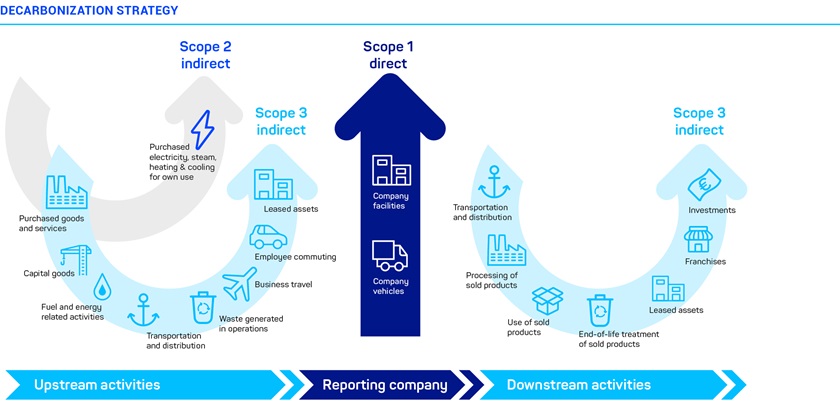
HARTMANN uses the internationally recognized emission categories (scopes) defined by the Greenhouse Gas Protocol to measure and report greenhouse gas emissions:

Scope 1: all emissions caused directly by combustion, including those from the company vehicle fleet (e.g. heating oil or natural gas in production and diesel in vehicles).

Scope 2: all emissions caused by purchased energy (e.g. electricity, district heating and cooling, steam from external energy suppliers).

Scope 3: all other emissions that are caused by the company’s activities but are not under its control (e.g. upstream and downstream activities of suppliers, service providers, employees and end users).

HARTMANN pursues a comprehensive strategy for CO₂ neutrality and implements numerous measures to reduce direct (Scope 1) and indirect emissions (Scope 2). The targeted reduction of emissions in various areas of the company is a core component of the climate strategy. HARTMANN is focusing on various fields of action.

  • In addition to packaging optimization to reduce waste, this includes increasing electric vehicle adoption in the fleet and various optimization measures to reduce emissions in the transport sector.
  • The divisions conduct life cycle assessments (LCAs) to identify sustainability levers, which they use to develop and implement appropriate measures.
  • Procurement of renewable energy is increasing, and our sites are gradually switching to zero or low carbon heating systems such as heat pumps, district heating or electric boilers.
  • In production, the focus is on reducing process heat emissions through the use of zero or low carbon technologies such as biomass, electric heating or heat-free processes.

Ongoing improvements in energy efficiency facilitate the implementation of these measures and contribute to further emission reductions. In addition, on-site renewable energy generation is expanding through the gradual implementation of new photovoltaic systems, reducing the need to purchase CO₂-neutral energy. However, technical building requirements, regulatory conditions and economic factors must be taken into account. In addition, HARTMANN is investigating customized solutions to reduce CO₂ emissions for smaller emission sources, such as diesel generators, and is evaluating the replacement of older systems with lower-emission alternatives.

HARTMANN is pursuing its decarbonization goals by implementing a comprehensive strategy with a firm commitment to sustainability. By consistently implementing the above-mentioned measures, the company is making an important contribution to achieving international climate targets and reducing its own ecological footprint. At the same time, HARTMANN is continuously developing its sustainability strategy so that the company can react flexibly to new technological developments and regulatory requirements. The company remains committed to its responsibility to customers, business partners, the environment and society. This commitment includes providing safe and sustainable healthcare solutions while actively contributing to climate neutrality.